|
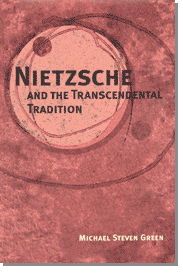
and the Transcendental Tradition by Michael
Steven Green |
 _____________________ Purchasing
Information
Website on
|
In both his published
works and his
notebooks, Friedrich Nietzsche appears to reject the possibility of
truth.
The large and growing secondary literature on this topic can be divided
into two groups. On the one hand, if a reading accepts that Nietzsche
really
engaged in a critique of truth, it fails to address the apparently
overwhelming
objections that can be lodged against this critique. On the other hand,
if a reading is aware of these objections, it argues that, contrary to
appearances, Nietzsche did not engage in a critique of truth or did so
early in his career but abandoned this critique precisely because of
its
incoherence.
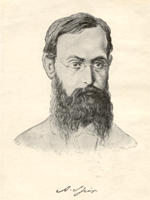
Michael Steven Green argues that Nietzsche rejected the possibility of truth throughout his period of philosophical activity and, what is more important, that most of the objections to this critique can be met. Green makes sense of Nietzsche's views on truth and knowledge by drawing on the nineteenth-century Neo-Kantian tradition within which he worked. In particular, Green looks to the enormous influence exerted upon Nietzsche by the little-known Ukrainian philosopher Afrikan Spir. Seen in this light, Nietzsche emerges as both more and less radical a thinker than has commonly been assumed. He is more radical in the sense that his critique of truth is far more comprehensive and persuasive than most have suspected. He is less radical in the sense that this critique is a natural development of the Kantian tradition of transcendental idealism within which he worked. Michael
Steven Green is the Dudley W. Woodbridge Professor of Law at the College of William &
Mary. |